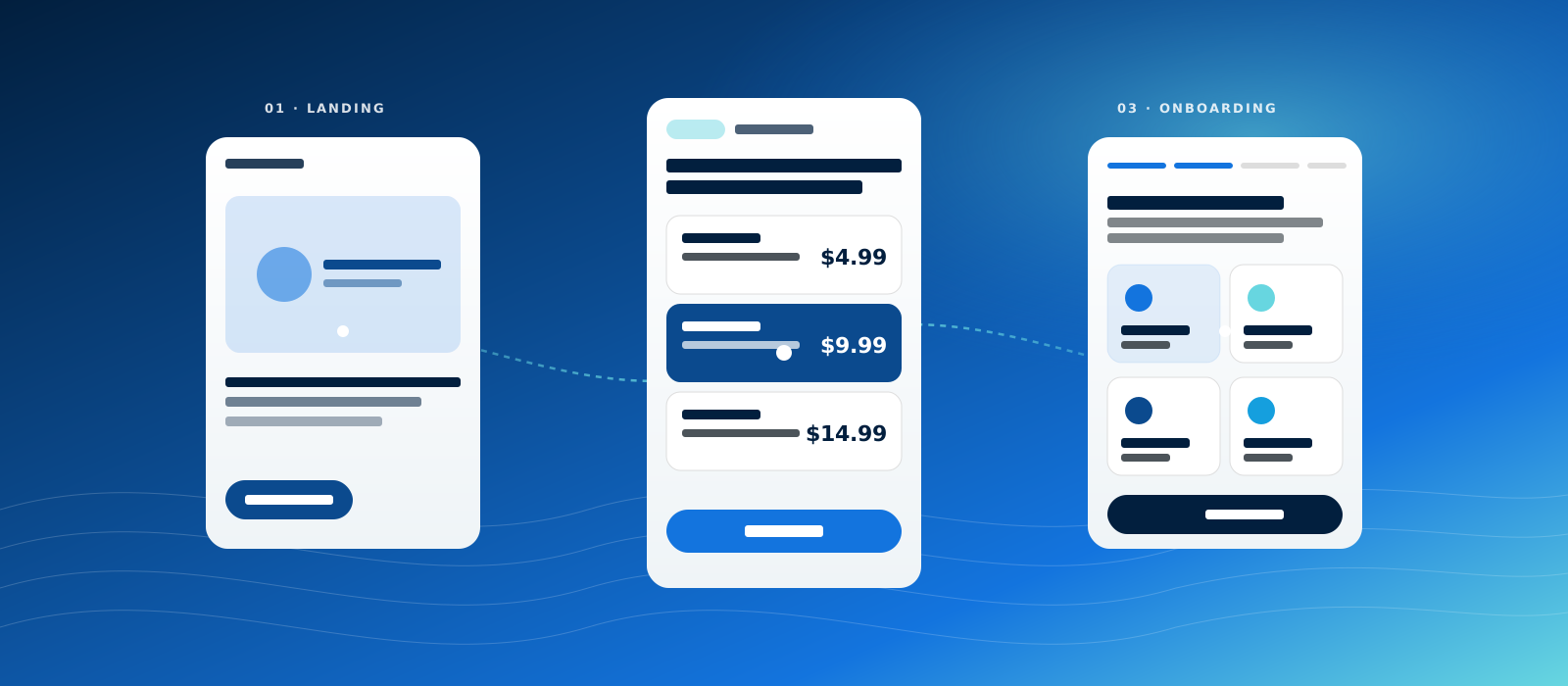

Most subscription funnels include one or more of these elements: ads, landing pages, paywalls, and onboarding flows. Almost nobody connects them into a continuous experience.
Together, those elements are the subscriber experience layer — every part of the journey from first impression to first payment.
Each element typically belongs to a different team and gets built in isolation. The ad team chases clicks, product may ship a paywall when engineering has capacity, and either team — or nobody — might be in charge of any experience in the middle of the funnel. Meanwhile the subscriber treks through a series of disjointed experiences, each one a chance to drop off.
This is the core problem in subscription growth. Rarely is there a thread from first impression through conversion, onboarding, and into the product itself. Without anything unifying the subscriber experience, conversion suffers.
"
Subscription orchestration is the practice of connecting subscription funnel elements into one continuous, testable, optimizable subscriber journey across channels and surfaces.
"
How most subscription teams operate today
If you have a subscription growth or product team, chances are you have very little insight into — or say in — what subscribers experience outside of your small section of the funnel.
Marketing may drive traffic but have no control over what happens after the click. Product handles the paywall but is blind to anything up the funnel. Or product manages onboarding, but the preceding paywall is built by an outside vendor. Each team optimizes their funnel section, and each is optimized in isolation.
This may be manageable for smaller businesses. When you’re at 100K+ subscribers, the cracks show up fast.
Common subscriber experiences when no one owns the journey
- They click an ad promising one thing and land on a generic paywall that doesn't match.
- They sign up and hit an onboarding flow that feels disconnected from the screen that just converted them.
- They're presented with an upgrade offer that ignores everything they've done in the product.
Each handoff is a chance to drop off. Most subscriber experiences are full of them.
What’s actually missing: the experience layer
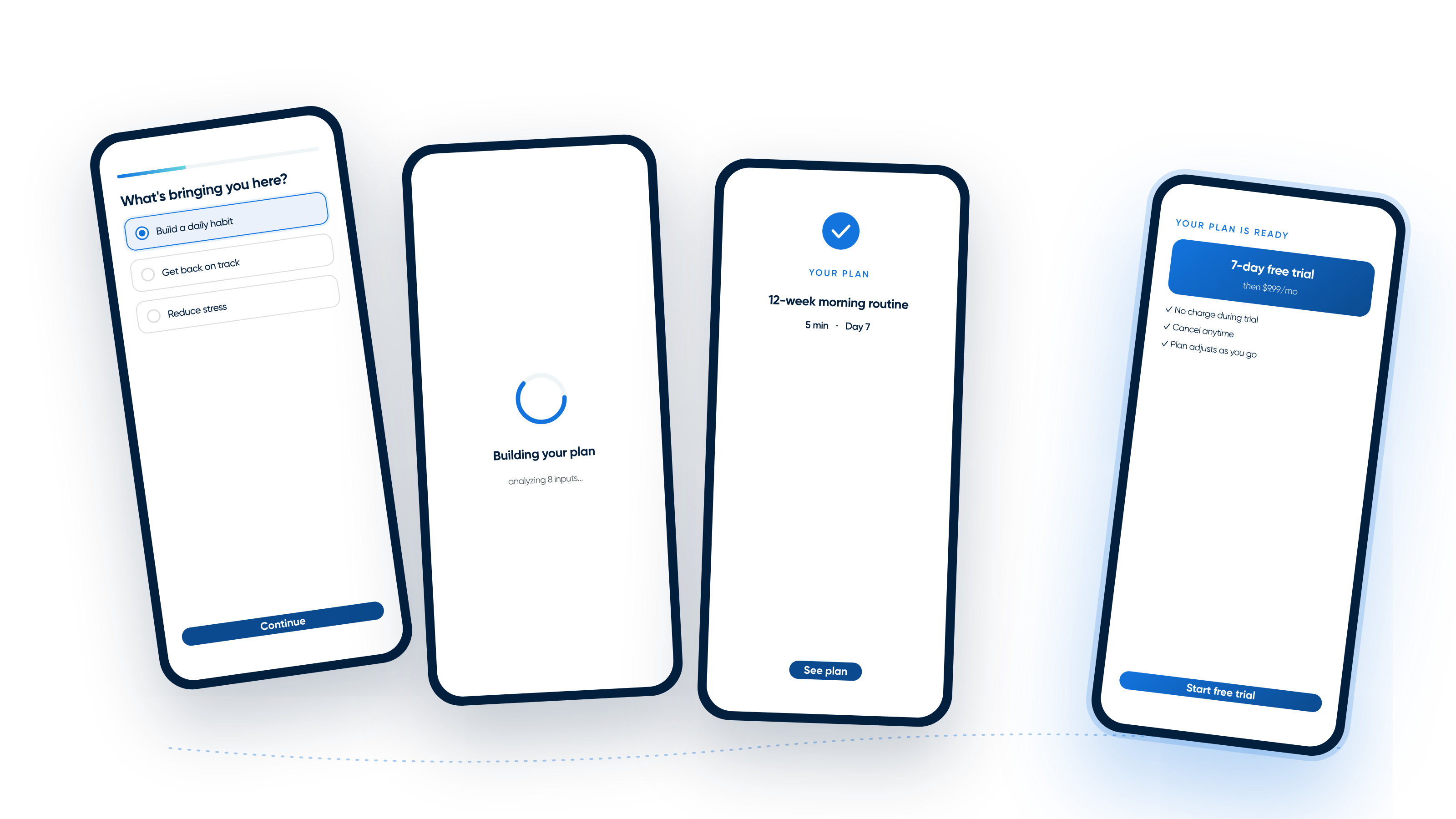
Between the ad that brings them in and the product they land in, subscribers pass through a series of moments — typically landing pages, paywalls, and onboarding flows. This is the experience layer. It contains every decision point where your subscriber chooses to keep going or bail.
"
The experience layer is where a transaction becomes a relationship. And for most subscription teams, it’s the least systematic part of the entire operation.
"
Most subscription teams aren’t managing this layer deliberately. Subscription orchestration is the discipline of managing it on purpose — designing, connecting, and continuously testing every step that gives subscribers the best opportunity to stick with you.
Signs of subscription orchestration breakdown
- A single landing page handles every subscriber, regardless of source.
- Paywalls don't take segment into account in messaging or pricing.
- Data is analyzed in retrospect, too late to course-correct.
What subscription orchestration looks like
In practice, subscription orchestration means a few specific things.
Designing subscriber experiences intentionally
Landing pages, paywalls, and onboarding flows get the same deliberate design attention as ads and the product itself.
Connecting experiences into complete subscriber journeys
The whole journey from first impression to first payment is mapped and managed, not scattered across teams.
Experimenting with everything, continuously
A/B and multivariate experiments run on ads, pages, flows, and onboarding. Winning variants stay; losing variants are pulled. Teams doing this well run hundreds of experiments per month across their subscriber experiences.
Coordinating across every platform
The experience is consistent across channels and surfaces — or intentionally different where context calls for it. Ideally, changes are launched universally as a single update.
Tying creative decisions to measurable outcomes
Every design change, flow variation, and experiment result connects back to conversion, activation, and revenue. Teams see in real time which experiences are driving subscriber growth.
Examples of successful subscription orchestration
- Custom landing pages tailored to the ad each subscriber entered from.
- Targeted paywall messaging based on segment, region, or platform.
- Data analyzed in real time, with creative refreshed before fatigue sets in.
The state of the subscription industry
Three shifts are making subscription orchestration more urgent than it was two years ago.
Subscriber acquisition costs keep climbing
As paid channels get more expensive, the ROI on converting traffic you already have goes up. A 12% improvement in conversion rate, achievable with structured experimentation on the experience layer, can outperform a 20% increase in ad spend.
CTV is fragmenting the subscriber journey
Streaming and media companies are managing more than iOS and Android. They’re managing Roku, Fire TV, Apple TV, Samsung, LG, Xbox, Vega OS, and more — each with different technical constraints and subscriber expectations. Without a unified system, teams end up building and maintaining subscriber experiences for each one independently.
Product and marketing teams need to move faster
The companies that iterate fastest on subscriber experiences win. When every page change requires a sprint and every experiment requires engineering, evolution stalls. Teams that go from idea to live experiment in hours instead of weeks have a compounding advantage.
How teams benefit from subscription orchestration
Outcomes vary by company size and vertical, but the pattern is consistent.
Faster iteration
Teams go from concept to live subscriber experience in days, down from weeks or months. Product and marketing ship without engineering tickets.
More experiments, better results
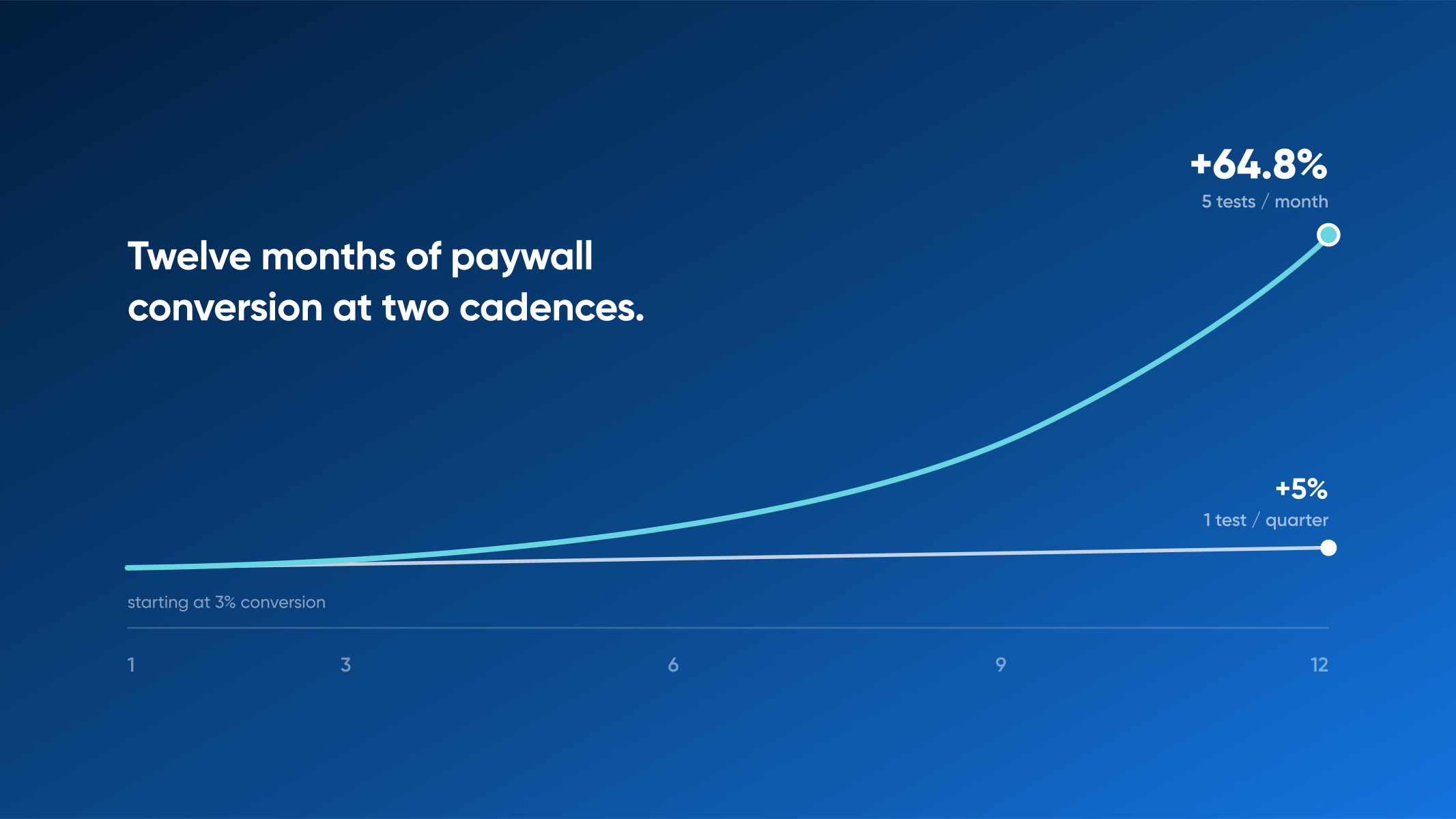
With experimentation friction removed, teams run hundreds of experiments per month across subscriber experiences. More experiments mean faster learning, which compounds into higher conversion rates over time — the upside of closing the paywall experiment velocity gap.
Cross-platform consistency
Subscriber experiences stay coherent across your entire subscription business — mobile, web, CTV, and anywhere else subscribers meet your brand.
Product and marketing alignment
Both teams work from the same implementation plan, the same journeys, and the same data. The organizational gray area between “who owns the paywall” and “who owns the landing flow” gets a shared home.
Implementing subscription orchestration
If you’re evaluating whether subscription orchestration fits your business, start with a few questions.
Nami is a subscription orchestration platform that gives product and marketing teams control over the experience layer across mobile, web, CTV, and more. If you want to see how it works for your growth and product teams, book a demo.